Should governments get involved in the retention of professional sports teams? If so, what does that look like? And, what are taxpayers willing to support in order keep their favorite team in town?
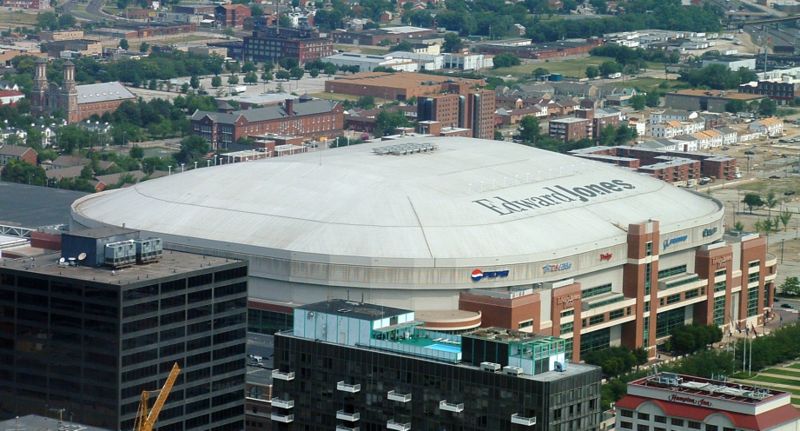
Edwards Jones Stadium could spark the next government-financed stadium in the United States. Photo by Kelly Martin.
These are some of the questions surrounding the current stadium situation of the National Football League’s (NFL) St. Louis Rams. Last week, the owner of the Rams Stan Kroenke announced plans to construct an 80,000 seat stadium suitable to host a NFL team in Inglewood, California. In a normal situation, this would have raised eyebrows considering the NFL’s long-standing desire to move a franchise to the Los Angeles area. However, the announcement comes as a warning to Rams fans and government officials as the team (who moved from Los Angeles in 1995) prepares to enter into a year-to-year lease of their current home Edward Jones Stadium. As a result, many in St. Louis and Missouri are looking to their leaders in government to for a new stadium deal that would keep the team in town.
St. Louis would not be the first city to face a similar situation. In Miami, the Miami Marlins (formerly known as the Florida Marlins) played in Sun Life Stadium from 1993 to 2011. Originally designed to host football, Sun Life Stadium failed to meet the demands of Marlins ownership who wanted a baseball-only venue to call home. After a legal battle and successful lobbying effort, the Marlins moved to Marlins Park in 2012. Costing $639 million, Marlins Park was financed largely through taxpayer dollars.
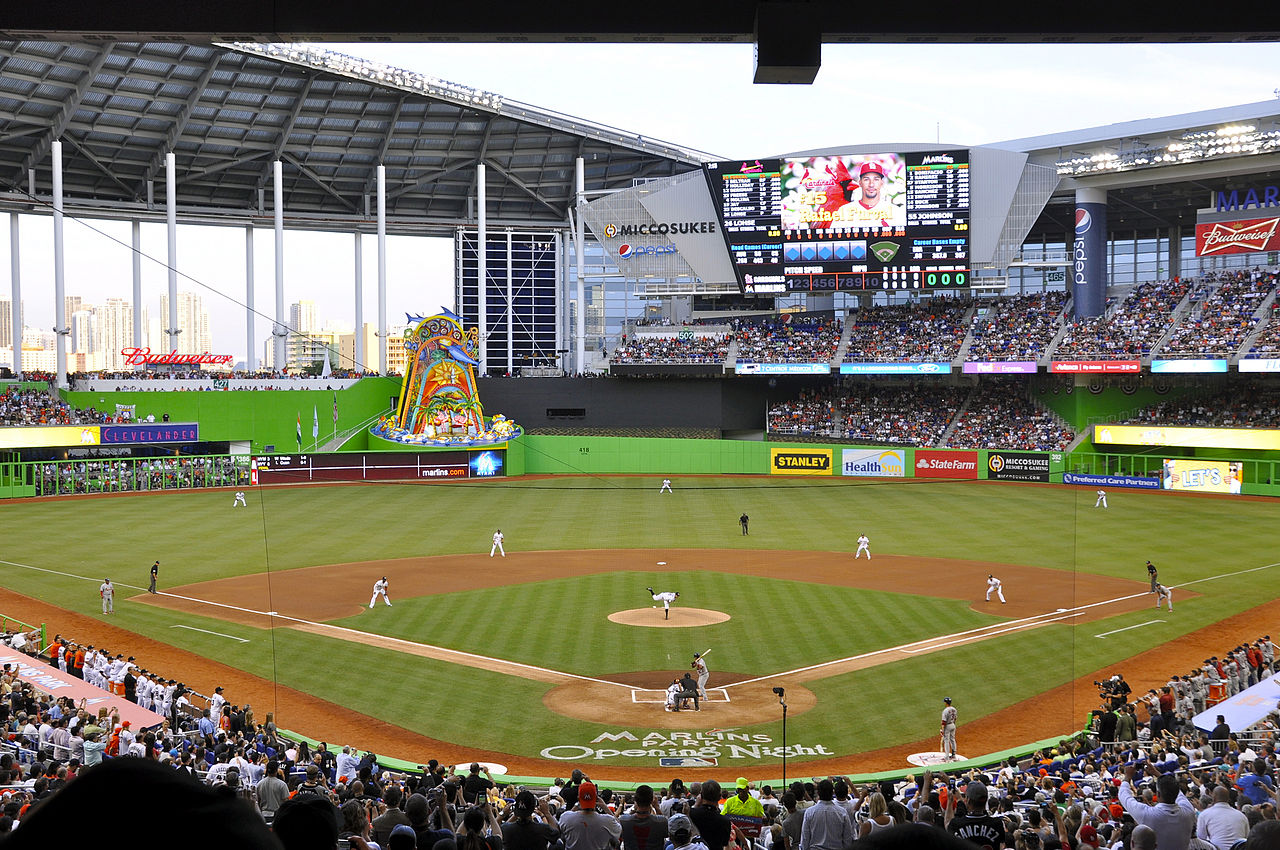
Once seen as an exciting investment, Marlins Park may be more of a burden to Miami taxpayers than desired. Photo by Roberto Coquis.
The outcome of the stadium has been mixed at best. After opening to great crowds early in 2012, the Marlins weathered through a public relations nightmare. A losing season combined with the release of several high priced players and comments from manager Ozzie Guillen praising Fidel Castro (a cultural taboo in the Cuban stronghold of South Florida) led to dismal attendance in 2013. Add in a financing scheme that leaves Miami-Dade taxpayers responsible for an additional $1.18 billion in payments by 2042, and Marlins Park could end up being one of the worst government-involved stadium deals in history.
So far, city and state officials have pledged to do all they can to keep the Rams in St. Louis without increasing the tax burden on taxpayers. Yet, an proposed deal could still include a public investment of up to $535 million if all sides agree. In an era of tight budgets and increased demands on public services, it remains to be seen if taxpayers are willing to support such an investment to keep a team once known as “Greatest Show on Turf” from starting a new chapter out in California.
 The Heart of a City
One comment